
A Grapevine Feature · Autumn 2026
The Fall Menu
What Autumn Tastes Like in Hawaiʻi
By Uli Cutter
My family is not particularly fond of turkey. Our Thanksgiving table usually has ham and steak, a generous spread from Assaggio’s, and my mashed potatoes, cucumber dill salad and Viennese potato salad. Tiffany tells me her family always orders from Hy’s. We each have our traditions, and the food we look forward to often has as much to do with the people around the table as the holiday itself.
Thinking about Thanksgiving also makes me curious about the wider fall menu. There is a whole season of eating to enjoy, with ingredients worth seeking out whether we are planning a celebration, choosing a restaurant or simply making dinner at home.
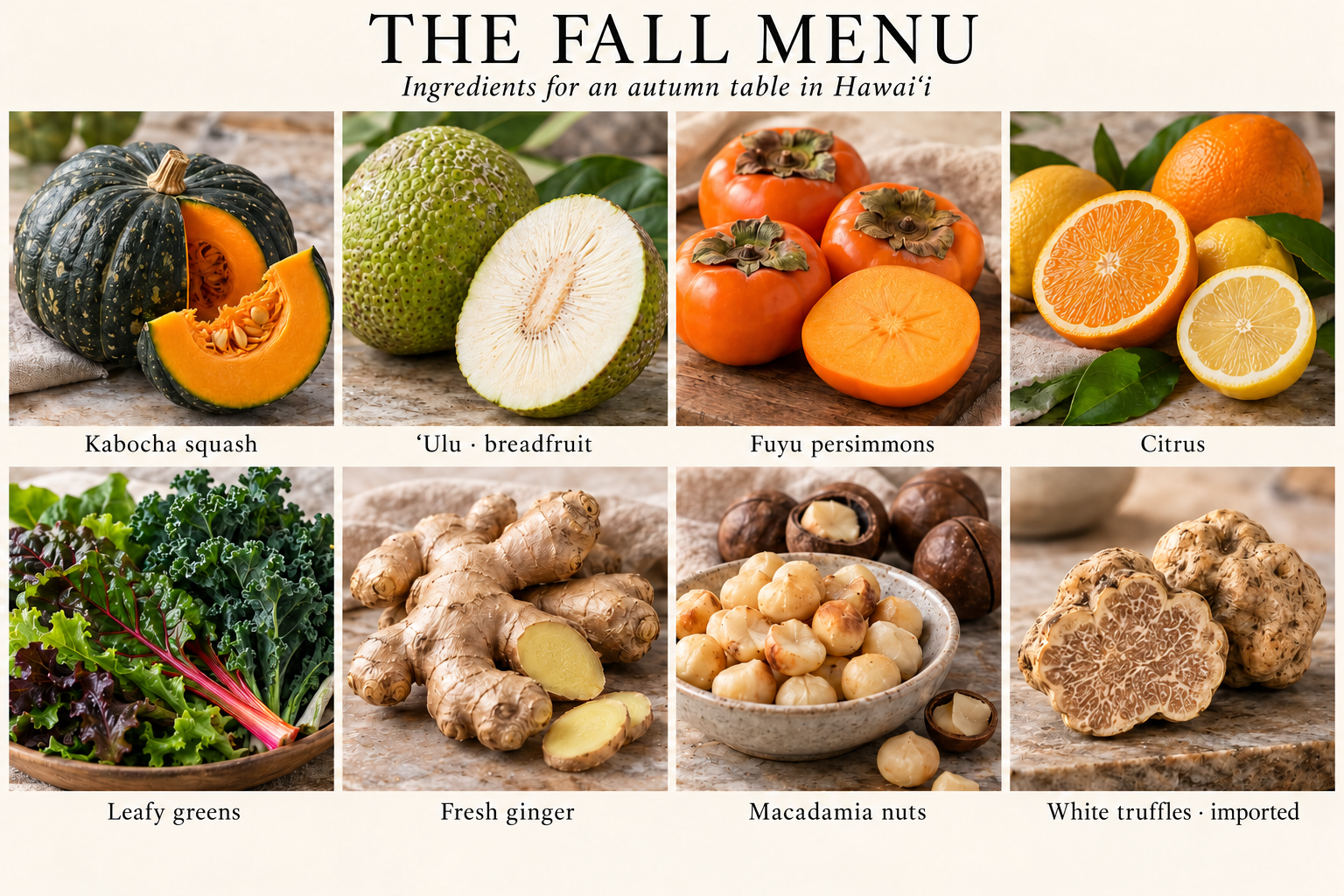
Here in Hawaiʻi, autumn has its own harvest. Kula persimmons are a particularly lovely example. Their season is brief, generally running from October into early December at the Hashimoto farms on Maui, with timing varying by variety and elevation. The firm Fuyu can be sliced into a salad; the heart-shaped Hachiya needs to become thoroughly soft before eating. That distinction matters when you bring them home. A ripe persimmon offers sweetness and beautiful color, and deserves a little space on the plate.
ʻUlu belongs in the conversation too. The Hawaiʻi ʻUlu Cooperative identifies July through December as the main production window for most local varieties. Its versatility makes it particularly useful for a holiday meal. I would consider roasted wedges alongside a main course, or a smooth mash with butter and herbs. It is an appealing way to bring another island-grown ingredient to a familiar dinner.
Local squash and citrus give us more possibilities. Farm Link Hawaiʻi places squash, pumpkin and citrus among its October-to-January highlights, while cooler weather favors leafy greens. A roasted kabocha soup with a little ginger could begin the meal; citrus could brighten a dressing or a sauce. Actual availability depends on the farm and the weather, which gives us a good reason to ask growers what is tasting best that week.
That is the useful idea behind micro-seasonality: paying attention to the shorter moment when a particular ingredient is especially good. Knowing which farm grew it, and when it was harvested, makes the idea of eating locally much more specific. A persimmon’s brief season gives us a reason to enjoy it now.
Autumn also brings specialties from farther away. In Piedmont, white-truffle season runs from October into January. For a special dinner, I would ask whether a restaurant has fresh white truffles available and how the chef plans to serve them. A simple pasta or risotto would let the aroma take the lead. A seasonal ingredient can make the journey here and still give us a delicious connection to the place where it was gathered.
A Suggested Autumn Dinner
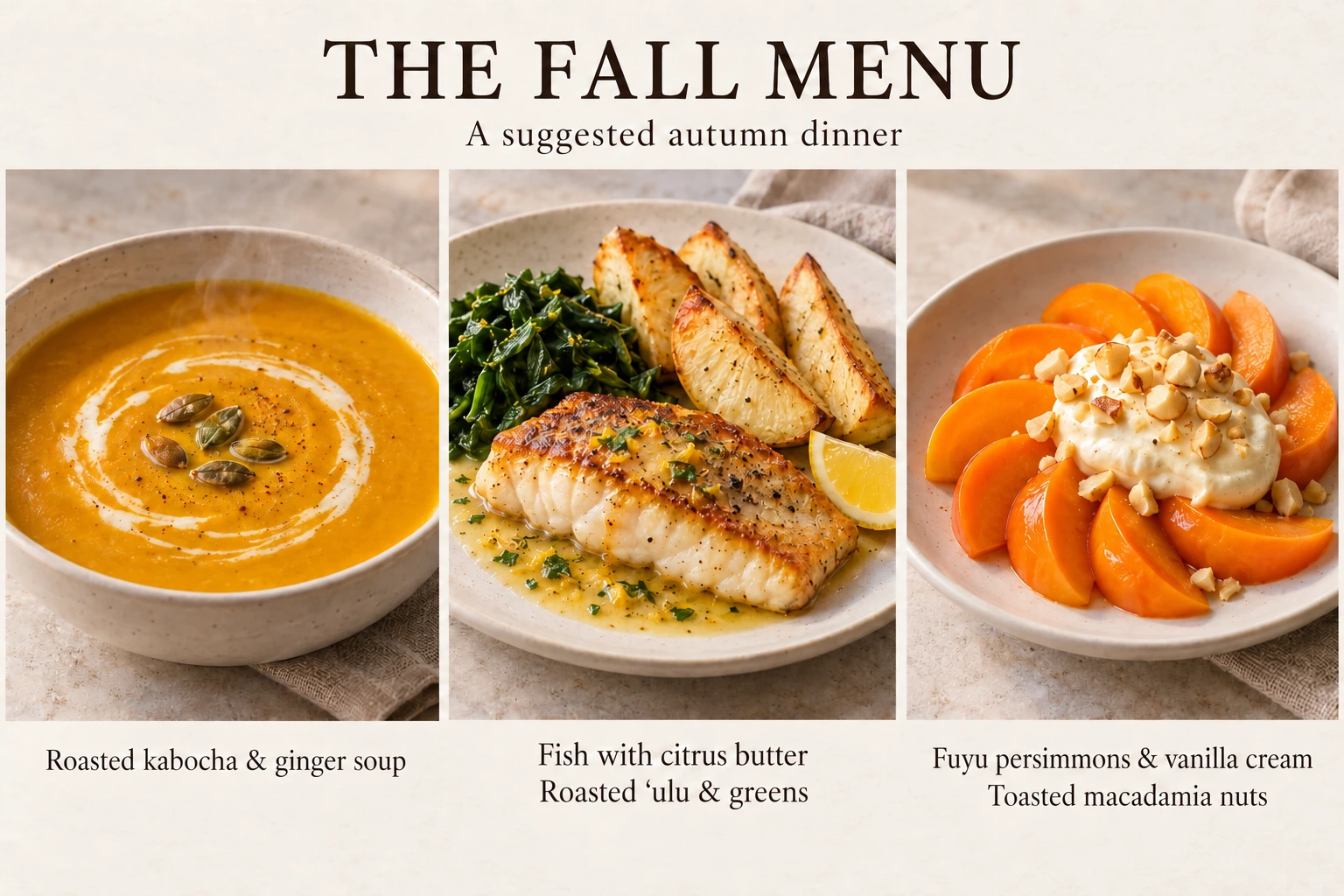
For my imagined Hawaiʻi fall dinner, I would start with a small bowl of roasted kabocha and ginger soup. A main course of local fish with a light citrus butter could follow, accompanied by roasted ʻulu and greens. For dessert, I would serve sliced ripe Fuyu persimmons with vanilla cream and toasted macadamia nuts. Those who prefer a roast could keep the same accompaniments and choose pork, beef or their Thanksgiving turkey.
There is room for discovery alongside the dishes our families expect. I suspect my Viennese potato salad will keep its place on our table. This year, there may be room for a few Kula persimmons as well.